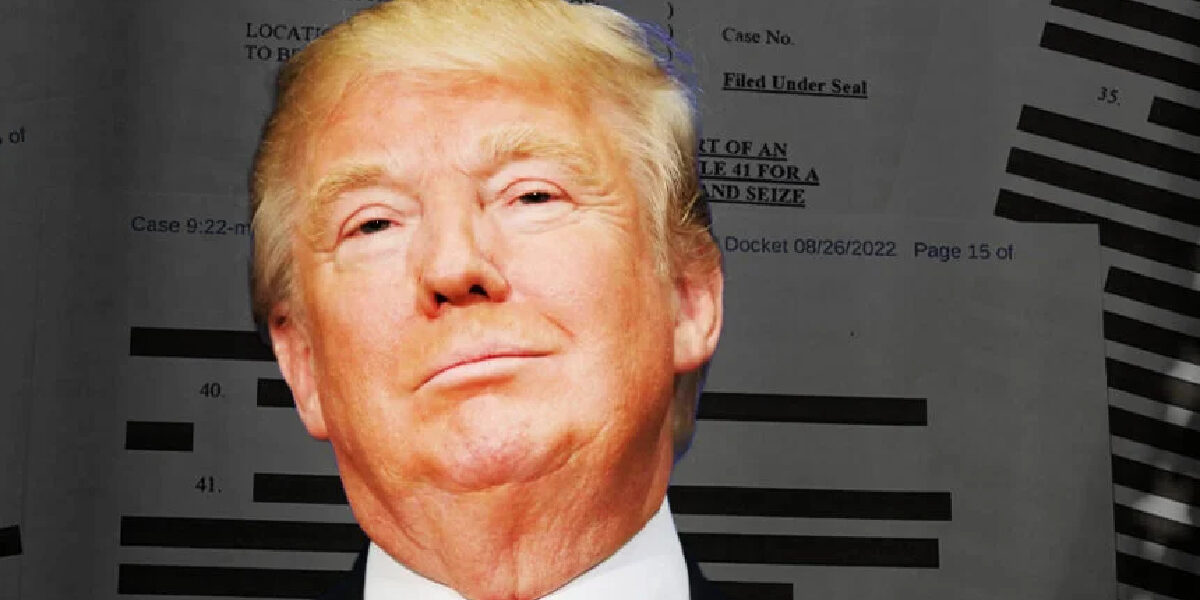
A political storm is building again after President Trump unexpectedly changed his stance on releasing the Jeffrey Epstein files — a shift that has dragged an old controversy back into the spotlight.
For months, Trump resisted calls to make the files public. But on Sunday night, he made a dramatic pivot on Truth Social, writing: “House Republicans should vote to release the Epstein files, because we have nothing to hide.”
This turnaround didn’t happen in a vacuum. The House was already preparing to force a vote, with every Democrat and four Republicans signing a discharge petition. Behind the scenes, Trump’s team urged Reps. Nancy Mace and Lauren Boebert to withdraw their names, but those attempts failed. With many more Republicans ready to back the measure, Trump’s opposition was collapsing fast.
The flip was striking coming from a president who campaigned on transparency in 2024 but later dismissed Epstein concerns as a partisan “hoax.” Now he says it’s “time to move on.”
But the timing of his reversal is raising new questions — especially as an earlier report about FBI redactions returns to public attention.
A Controversial Report Reemerges
A Bloomberg report revealed that during a massive DOJ-FBI internal review of the Epstein documents, an FBI FOIA team allegedly removed Trump’s name — and others — before deciding the files shouldn’t be released.
According to sources cited:
“Trump’s name appeared in the Epstein files, but an FBI FOIA team redacted his name, along with several high-profile individuals.”
The scale of the review was extraordinary. Up to 1,000 FBI employees worked around the clock to sift through more than 100,000 records. They reportedly found numerous mentions of Trump but used standard FOIA privacy exemptions to keep his name out of public view because he was a private citizen when the investigation began in 2006.
The redactions relied on:
- Exemption 6: protects against unwarranted invasions of personal privacy
- Exemption 7(C): shields personal information in law-enforcement files
These exemptions are commonly used — even for prominent individuals — yet the political implications are far from ordinary.
When asked about the redactions:
- The White House said nothing, directing inquiries to the FBI
- The FBI declined to comment entirely
- The DOJ offered no response
In July, the DOJ and FBI released a joint statement saying they had collected “over 300 GB” of Epstein-related material but argued that “no further disclosure would be appropriate.” That position outraged Trump supporters and conservative commentators. Joe Rogan accused the government of “gaslighting” Americans.
Trump dismissed the uproar as a Democratic smear campaign, but pressure only intensified.
Political Fallout Hits Trump’s Inner Circle
The fight over the files even caused a dramatic break between Trump and Rep. Marjorie Taylor Greene. After Greene supported the petition to force a vote, Trump publicly attacked her, calling her a “ranting Lunatic” and pulled his endorsement. He encouraged challengers to enter her primary, promising his “Complete and Unyielding Support.”
The House is now widely expected to pass the bill to release the files. The Senate remains uncertain — needing 60 votes — but Rep. Thomas Massie says as many as 100 Republicans are prepared to support the disclosure in the House.
Trump now wants Republicans to refocus on the economy, warning on social media that the Epstein issue is a political “TRAP” designed to divide the party.
Why Did Trump Suddenly Change His Position?
That’s the question dominating political circles.
Trump reversed course precisely as renewed reporting suggested his name may not appear in the documents at all — because FBI reviewers allegedly removed it long ago.
If Trump’s name is already redacted, endorsing the release carries minimal personal risk while allowing him to claim the moral high ground on transparency.
Yet the situation leaves voters with an uneasy takeaway:
The same administration that refused to release the Epstein files is now being accused of working aggressively to scrub specific names — including Trump’s — from them, and the president’s sudden support for disclosure only deepens public suspicion rather than calming it.