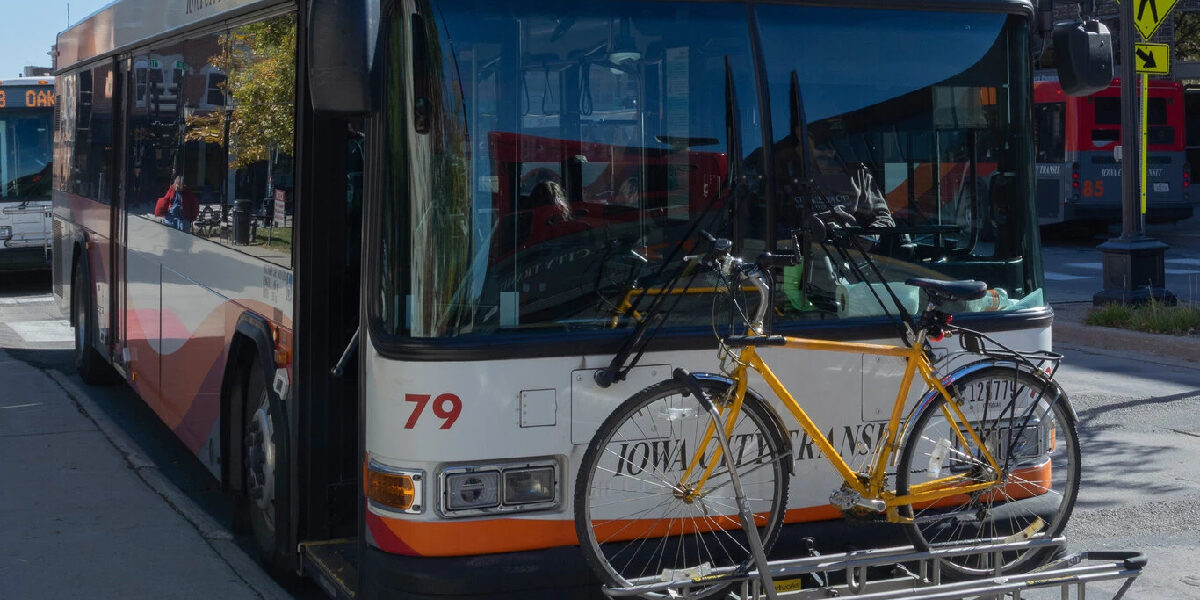
On a bright November morning in Iowa City, a diverse mix of riders boarded the city buses — a psychiatrist, a librarian, a part-time teacher, a biomedical engineering graduate student, an Amazon night-shift worker, and a man who preferred not to explain why he no longer had a driver’s license.
Different backgrounds, different destinations — but all excited about the same thing: the buses cost nothing to ride.
Iowa City officially removed bus fares in August 2023 as part of a plan to cut emissions, reduce car dependency, and make the city’s transit system more accessible. The two-year pilot proved so successful that the City Council voted to extend it for another year. The program is funded through a 1% utility tax increase and a doubling of most parking fees from $1 to $2.
The impact has been dramatic.
Ridership is now 18% higher than before the pandemic.
Drivers say traffic feels lighter.
According to city calculations:
- Residents drove 1.8 million fewer miles
- Carbon emissions dropped by 24,000 metric tons per year
- That reduction equals removing 5,200 cars from the road
For many locals, the savings matter.
“There’s no worrying about a pass anymore,” said 71-year-old Vincent Hiser as he rode the No. 1 bus home from his job. “Thirty-one dollars a month adds up.”
A Rare Experiment in the U.S. — But One That’s Working
Fare-free transit is unusual in America, but the idea is gaining attention after Zohran Mamdani won New York City’s mayoral race with a promise to make buses free. Critics have dismissed the idea as unrealistic, and New York Gov. Kathy Hochul has expressed skepticism.
But in Iowa City — home to the University of Iowa and the famous Writers’ Workshop — pushback has been minimal. The only major controversy came in summer 2024 when the city temporarily raised hourly parking rates downtown from $1.50 to $3. After businesses complained, the rate was adjusted to $2.25.
The business community still supports the free bus program.
“It’s been a huge success,” said Betsy Potter, executive director of the Iowa City Downtown District. She noted that while downtown is walkable, the larger city is not — making free buses an essential connection for workers and customers.
How Iowa City Got Here
The idea started with a conversation in 2018 after city officials discussed the book “Free Public Transit: And Why We Don’t Pay to Ride in Elevators.” The city wanted to modernize its transit system, cut family transportation costs, and meet long-term climate goals, including replacing 55% of vehicle trips with walking, biking, and public transit by 2050.
In 2021, Iowa City increased service frequency, streamlined routes, and began seriously evaluating a fare-free model. By 2023, the City Council approved the pilot, using federal Covid-19 relief funds to start the program.
The launch was celebrated citywide:
Artists decorated bus stops with colorful designs, jazz bands performed downtown, and a booth was set up where residents wrote thank-you notes to their bus drivers.
“You can make buses free, but they also have to feel convenient and enjoyable,” said Sarah Gardner, the city’s climate action coordinator. She noted that decades of car-centric marketing have shaped public attitudes, while buses never received the same cultural promotion.
The results speak for themselves.
Ridership reached 118% of pre-Covid levels, far above the national recovery rate of 85%.
Riders Are Happier — and Drivers Say Their Job Is Easier
Some feared fare-free service would increase conflicts on buses or attract problematic behavior. But drivers say the opposite happened.
Not collecting fares has reduced tension, eliminated delays from people searching for change, and improved schedules.
On-time arrivals increased by 13%, according to the city.
“It’s busier, but easier,” said Justin Jones, a driver for 15 years. “No more arguments about fares.”
A Daily Lifeline for Many Residents
On a recent morning, Jones began his shift on the No. 10 route, which runs from downtown to Iowa City’s west side.
One rider, 20-year-old Abbas Mahadi, used the service to walk his young cousin to elementary school.
“It would be too expensive without free buses,” he said.
At later stops, students hopped on — some avoiding high parking costs at the University of Iowa, others using the ride to study instead of driving through traffic.
“For me it’s a time saver,” said 21-year-old Spanish and translation major Abby Kloha, who spent her ride reviewing Japanese vocabulary.
Jones pulled up to an elementary school, waited as Mahadi guided his cousin across the street, then continued on the route — another smooth, fare-free trip through a city embracing a new idea of public transportation.