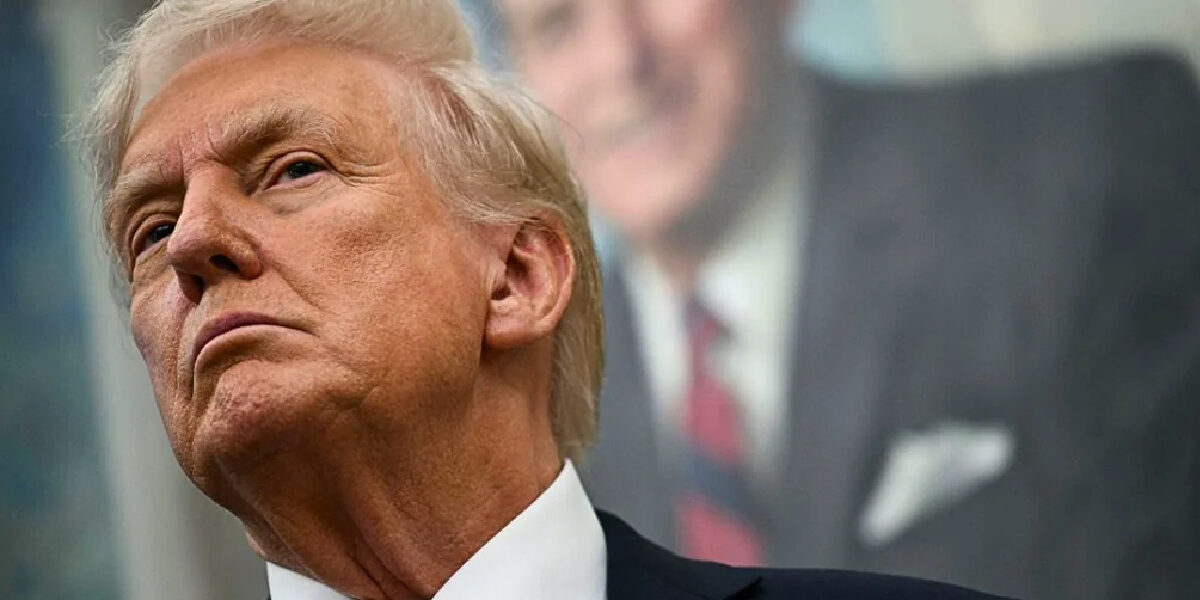
President Donald Trump reaffirmed Friday that his proposed $2,000 “tariff dividend” checks are still happening — just not this year. Speaking aboard Air Force One on his way to Mar-a-Lago, Trump acknowledged that Americans will need to wait a little longer for the payments tied to his trade policies.
“It will be next year,” Trump said directly.
He added that the tariffs will provide enough revenue not only to fund the dividend but also to begin reducing the national debt.
The update lands at a critical moment for the administration, which is recovering from off-year election losses and increased Democratic messaging around the cost of living. Trump first introduced the idea earlier this month on Truth Social, claiming that tariff revenue could be returned to most Americans in the form of a $2,000-per-person rebate, excluding high earners.
Poll Shows Strong Support for the Checks
A new survey from the Napolitan News Service indicates the proposal is widely popular.
71% of registered voters said they support the idea, with only 22% opposed.
Support spans the political spectrum:
- 88% of Republicans approve
- 56% of Democrats are in favor
- 69% of households earning over $150,000 like the plan
- 78% of households under $50,000 support it
But skepticism remains high.
Only 37% believe the government will actually deliver the checks.
A majority — 55% — say the payouts are unlikely.
Republicans are more hopeful: 52% expect the checks to arrive, compared to just 21% of Democrats.
Tariffs Are Funding the Plan — If Courts Allow It
Trump’s rebate proposal depends heavily on the survival of the tariffs he enacted using the International Emergency Economic Powers Act (IEEPA). According to U.S. Customs and Border Protection, those tariffs generated $90 billion through September 23. Additional duties pushed total tariff revenue to $195.9 billion from the start of FY2025 through August.
Officials say that if the tariffs remain in place for the full year, revenue will exceed those totals — enough to support the dividend program.
But the Supreme Court could upend everything.
Justices recently scrutinized the legality of Trump’s “reciprocal” and “trafficking” tariffs, questioning whether the IEEPA grants authority for such sweeping actions. One justice warned the administration might not be able to “get this power back,” signaling deep concern about overreaching trade authority.
Asked what happens if the court eliminates the tariffs, Trump hinted at backup options:
“Then I’d have to do something else,” he said, referring to alternatives such as tax credits — an idea Treasury Secretary Scott Bessent also floated during a recent interview.
Congress Is Another Major Obstacle
Even if the tariffs survive the courts, the checks still need approval from Congress — a hurdle complicated by deficit concerns within Trump’s own party.
Treasury Secretary Bessent recently suggested the White House is considering an income cap, saying the $2,000 rebate might apply to households earning under $100,000. He quickly clarified that no final decision has been made. Trump himself has said high earners would be excluded but hasn’t defined a specific threshold.
Economists remain divided:
- Critics argue the math doesn’t add up, noting that Trump’s claims of “trillions” in revenue go far beyond real collections.
- The Tax Foundation estimates the plan could cost $300 billion with an income cap.
- The Committee for a Responsible Federal Budget says the total could reach $464 billion if it mirrors COVID-era stimulus payments.
But tariff supporters gained fresh ammunition from a recent San Francisco Federal Reserve study, which concluded that historically, tariffs correlate with lower inflation, not higher prices — a finding that challenges long-standing economic assumptions.
The Public Watches as Court and Congress Decide the Outcome
If the Supreme Court invalidates the IEEPA tariffs, it’s unclear whether refunds would be required or how that would affect Trump’s planned dividend. For now, the administration is pressing ahead, confident that public support will strengthen its case.
One post on X summed up the mood:
“Of course we do” — referring to the checks — accompanied by a skeptical emoji.
Trump’s tariff strategy, once a hallmark of his first term, has now become a central piece of his economic argument heading into the 2026 midterms. Whether Americans eventually receive their $2,000 checks depends on two unpredictable forces: Congress and the Supreme Court.
For millions of households, the waiting continues — with hopes high, but expectations cautious.